

HOME > Business
When methanol encounters Hong Kong's regulations, this dialogue provides a "new answer" for the global energy transition.
The winds of the harbor are erasing the traces of traditional fossil fuels and carrying the refreshing scent of green methanol.
Recently, during the special interview program "Xiangjiang Green Movement: Paving the Way for a Sustainable Future" hosted by Zeng Lingyi, a member of the National Committee of the Chinese People's Political Consultative Conference and host of Phoenix TV's Jinshi Finance program, four guests from industry, academia, and the legislative sector engaged in an in-depth discussion on the future development of green energy, covering topics such as technological advancement, energy security, urban governance, and financial regulations.

The "Methanol Solution" Amid Energy Transformation
The "impossible triangle" of global energy transition: ensuring supply security, achieving carbon neutrality, and maintaining economic viability all at once.
Geopolitical conflicts have prompted countries to reassess their energy independence strategies, though approaches vary significantly: Europe focuses on wind, solar and hydrogen energy; Japan prioritizes hydrogen and synthetic fuels; while the United States adopts a hybrid approach combining natural gas with renewable energy.
Based on its national conditions characterized by "abundant coal but scarce oil and gas," China has developed a diversified system comprising wind, solar, and electricity power, green hydrogen, and green methanol.

During the interview, Liu Ke, foreign academician of the Australian Academy of Technology and Engineering and Dean of the Innovation and Entrepreneurship College at Southern University of Science and Technology, emphasized that "batteries cannot be universally applicable"; they are better suited to flat, warm regions, whereas liquid energy remains essential in cold mountainous areas and heavy-duty maritime applications.
Ships worldwide are using heavy fuel oil, as batteries are too heavy and have insufficient range.
Green methanol stands out as one of the few scalable solutions capable of supporting the carbon neutrality agenda over the long term, thanks to its advantages: liquid storage and transportation at ambient temperature and pressure, compatibility with existing oil and gas infrastructure, and emissions only one-tenth those of National VI gasoline vehicles.
Eighty percent of methanol's energy comes from wind and solar power, with only 20% derived from carbon sources; it has controllable costs and is far cleaner than gasoline or diesel.
This aligns with the observations of Zhang Chaoyang, founder, chairman and CEO of Sohu and Ph.D. in physics: methanol requires less oxygen for combustion and carries lower risks of incomplete combustion; "its molecular formula inherently contains oxygen atoms, making it cleaner than gasoline, with higher energy density and better storage/transportability suited for high-density cities."
This is precisely the wisdom behind the methanol solution.
Amid the global push for energy diversification, no single energy source can dominate the market. Yet methanol offers a pragmatic solution rooted in Eastern wisdom—it does not undermine existing technological frameworks but rather implements incremental improvements upon them.
This form of "gradual innovation" often proves more viable in practice than radical "disruptive revolutions," emerging as a common ground that addresses the three critical constraints of energy security, carbon neutrality, and economic feasibility.
Transforming Hong Kong from a "crossroads" into a "price-setting hub"
When the discussion turned to Hong Kong, Legislative Council member Chan Pak-chi stated unequivocally that the city stands at a critical juncture of transformation, with the Climate Action Plan 2050 having set a clear direction.
As Zeng Zhanyi mentioned on the program, Hong Kong recently completed the world's first refueling operation for a methanol dual-fuel vessel, and its new electric vehicle penetration rate now ranks first in Asia—though the key lies in the Legislative Council's move to "break down barriers and ease restrictions."
Refine refueling standards, promote mutual recognition of tax exemptions and benchmarks, and lower the barriers to upgrading conventional facilities. "Guidelines for refueling operations, safety standards, and transportation regulations must all be aligned more promptly," ensuring Hong Kong evolves from merely a transit hub for green fuels into Asia's premier center for green methanol trade and pricing.
Chen Bozhi also specifically highlighted that the fuel costs for fishermen at sea continue to rise, and short-term diesel subsidies are not a sustainable solution; a diversified energy mix is the fundamental solution.
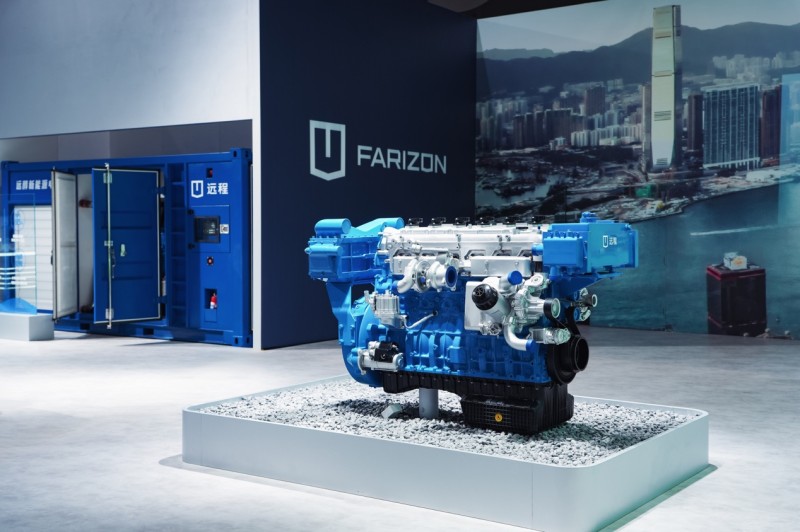
This transformation is grounded in solid practical foundations.
Chen Bozhi emphasized that liquid new energy is inherently compatible with traditional oil and gas infrastructure, enabling low-cost operation of existing systems for refueling, storage, transportation, and trade.
This means Hong Kong doesn't need to "reinstall the entire system"; it only requires a "software upgrade".
As a free port, Hong Kong is well-positioned to integrate the mainland's green methanol industry chain, Southeast Asian shipping networks, and international trade, serving as a strategic hub for promoting global standards.
Hong Kong's true opportunity lies not in producing large quantities of green methanol, but in leveraging its common law framework and status as a financial hub to transform mainland China's production capacity advantages into pricing power and standard-setting authority in the international market—this represents the most irreplaceable value under the "One Country, Two Systems" principle.
Geely's "Methanol Solution"
In this energy revolution, the "methanol answer" brought by Li Shufu, chairman of Geely Holding Group, has become a "Geely exploration" connecting the national strategy with the practice in Hong Kong.
Looking back on the persistence of more than 20 years, Li Shufu's tone is firm: "Methanol is not an alternative, but one of the global energy paths in parallel with electricity and hydrogen for a long time." This insistence is not a gamble, but a strategic judgment based on China's energy structure. Today, Geely has operated about 60,000 or 70,000 methanol vehicles in the Mainland, covering Guiyang, Harbin and other diverse climate zones, verifying the technical maturity; The central government has also given special subsidies to inland methanol-powered ships, and the top-level design support is clear.
Geely has brought to Hong Kong a comprehensive "green, intelligent transportation and new energy ecosystem solution".
Li Shufeng revealed that, if methanol-powered vehicles are introduced to Hong Kong based on the standards and regulatory framework already in place on the mainland, their implementation would be "very quick." The conversion of existing gas stations is also cost-effective, and the relevant technology and equipment are fully mature. Furthermore, Cao Cao's Robotaxi application has also been submitted to Hong Kong, with the aim of providing services to Hong Kong residents. The combination of "green methanol + intelligent driving" offers the optimal solution for energy transition in high-density urban areas – methanol hybrid vehicles can reduce vehicle weight and reduce energy consumption during acceleration and deceleration, making them particularly suitable for Hong Kong's hilly terrain and frequent start-stop scenarios.
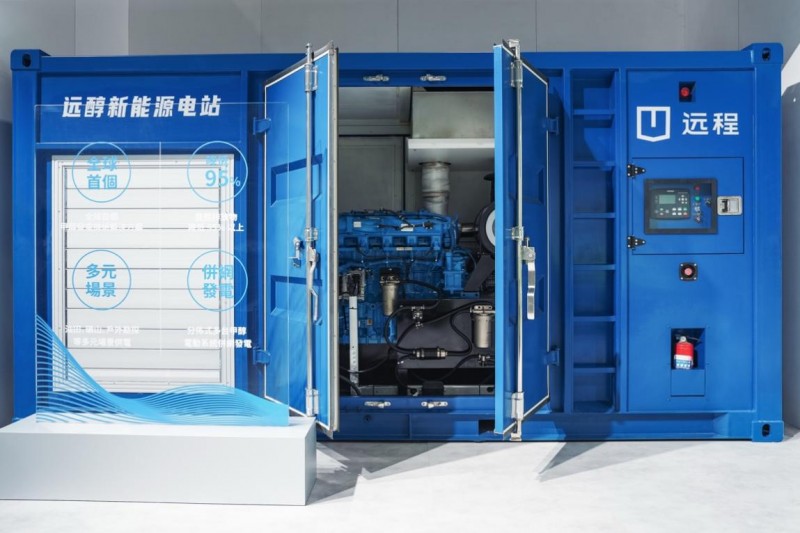
The deeper significance lies in the validation of standard outputs.
Leveraging Hong Kong's international certification and financial advantages, this collaboration is expected to help Geely overcome challenges in standard mutual recognition, fueling infrastructure development, and tariff compliance.
As Academician Liu Ke stated, "Nearly 20,000 methanol-powered vehicles in Guiyang have operated for over a decade without any safety incidents," thereby refuting claims that methanol is toxic and unsafe. This underscores the need to avoid artificial barriers akin to the 'Hongqi Act' and ensure that scientific advancements benefit the general public.
By adopting this mature system, Hong Kong can not only reduce pollution from local ports and container trucks (over 60% of emissions in port cities originate from diesel-powered vessels and containers), but also set a benchmark for global port cities.
This is not merely Geely's solution, but a replicable model for high-density urban energy transition.
It is evident that the significance of the Hong Kong pilot lies in verifying whether this energy ecosystem, entirely defined by China enterprises, can gain institutional recognition in the international high-end market.
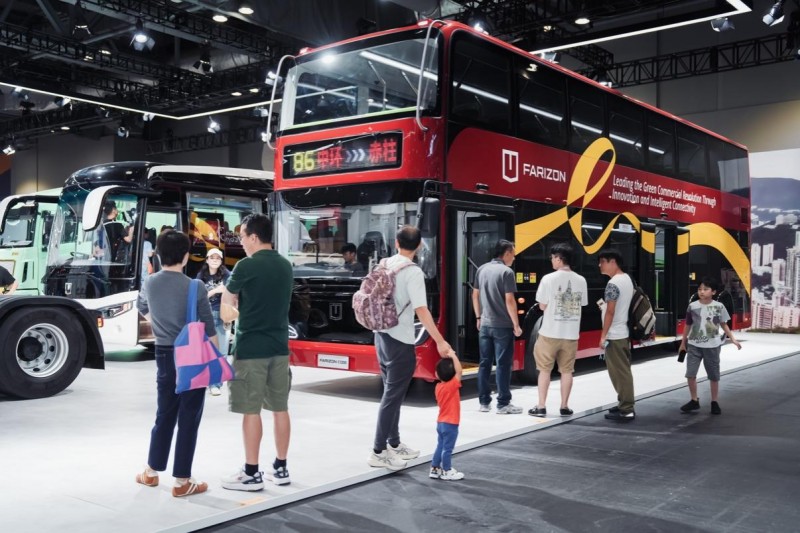
"The world needs diversified energy sources; China possesses mature technologies, and Hong Kong has unique systems. The combination of these three elements represents new opportunities for Hong Kong," Zeng Jingyi summarized the dialogue and sketched a future vision: when ships in Victoria Harbour and buses on roads run under "liquid sunlight," when cross-border travel in the Greater Bay Area becomes more convenient and intelligent thanks to green methanol, and when the global price benchmark for methanol is established along the shores of Victoria Harbour.
This is not merely a matter for one enterprise, but a significant issue concerning China's energy strategy and benefiting both the nation and its people.
Hong Kong has taken the lead by setting an example for port cities around the world.
The greatest value of this dialogue lies in breaking the traditional divide between "technology as technology" and "finance as finance."
It demonstrates that in the challenging phase of energy transition, those who can effectively integrate technology, regulations, and capital will seize the initiative in the next era.
From technological breakthroughs to standard-setting, from industrial implementation to financial pricing, Hong Kong is embarking on the challenging phase of energy transition with a renewed approach.
Here, China can not only provide technology but also contribute rules and wisdom.
The transformation of Hong Kong is both an exploration by China and a global opportunity.